Sunday School
Old St. Joseph’s Church, Chinatown, Manhattan, NYC, March 2025
 Exhibition text by curator Gabriel Nash
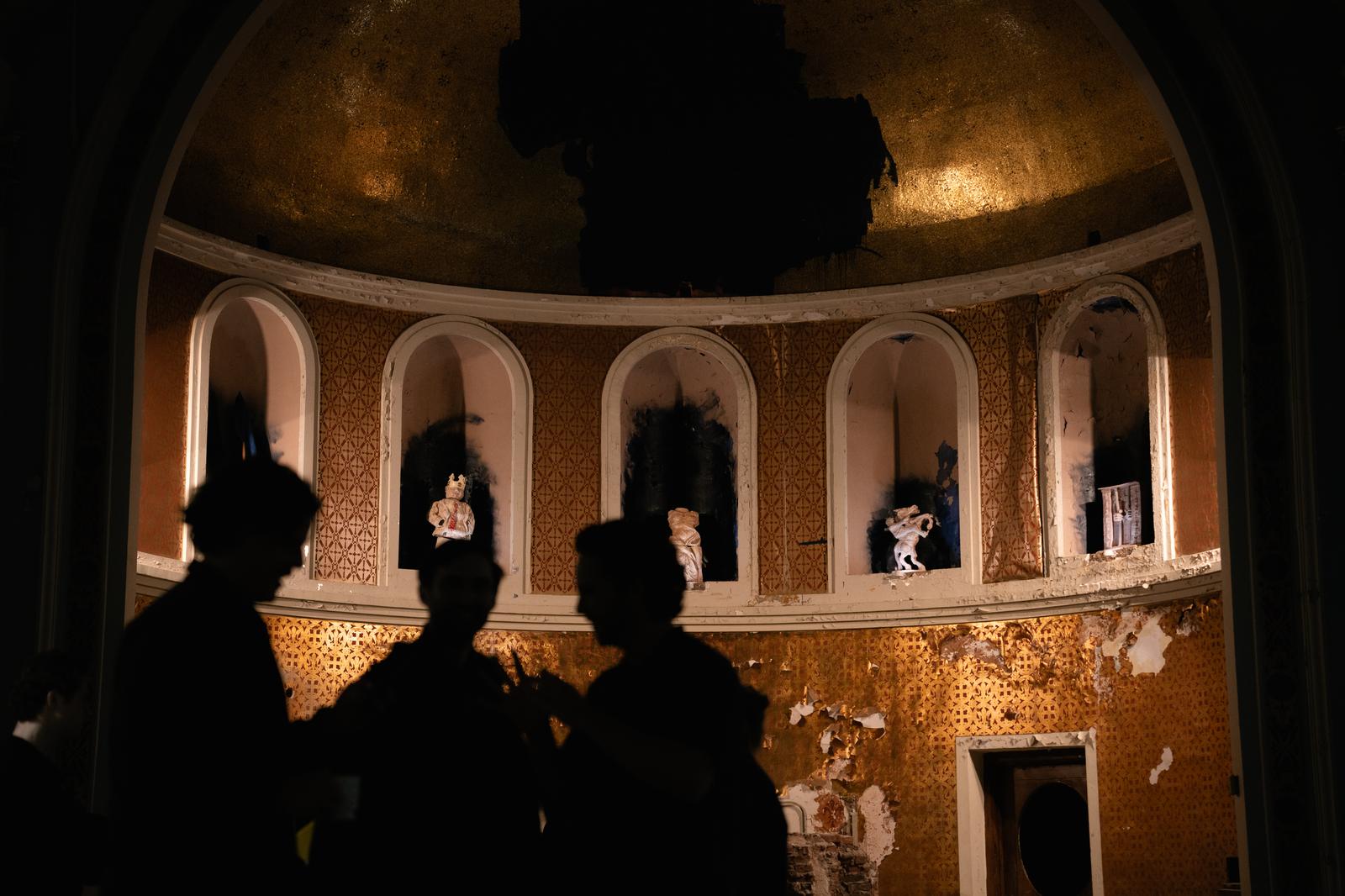
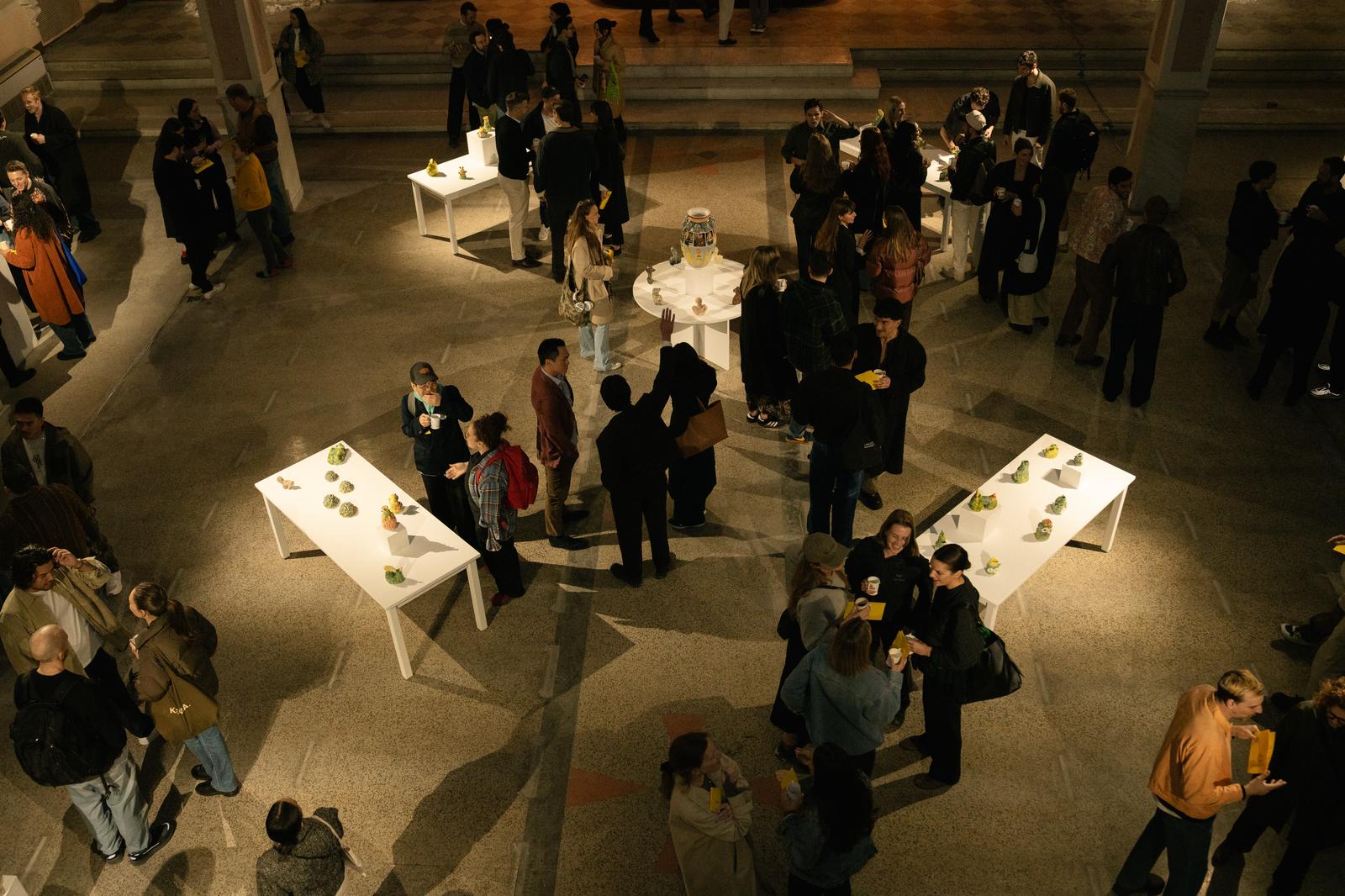
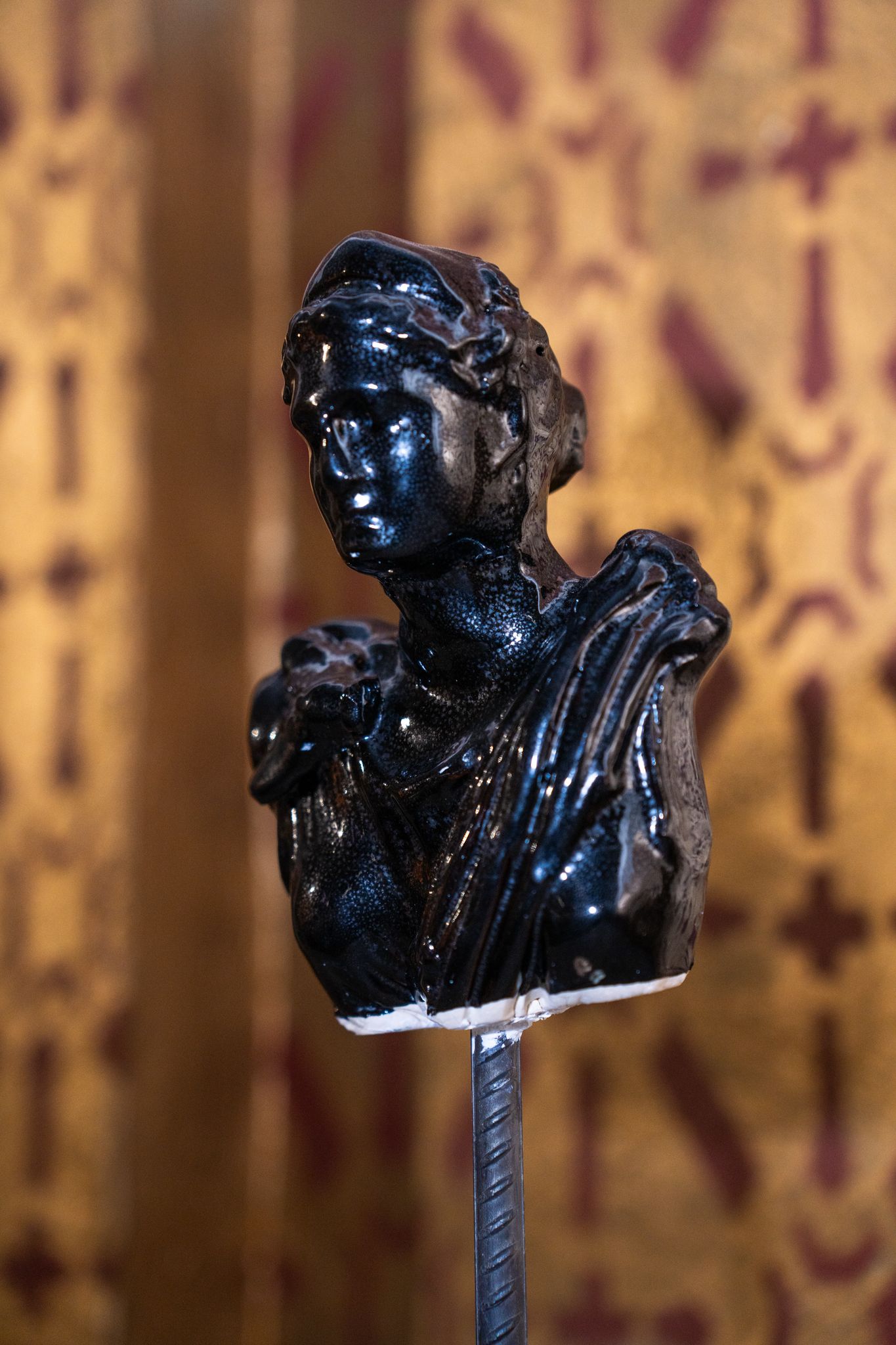
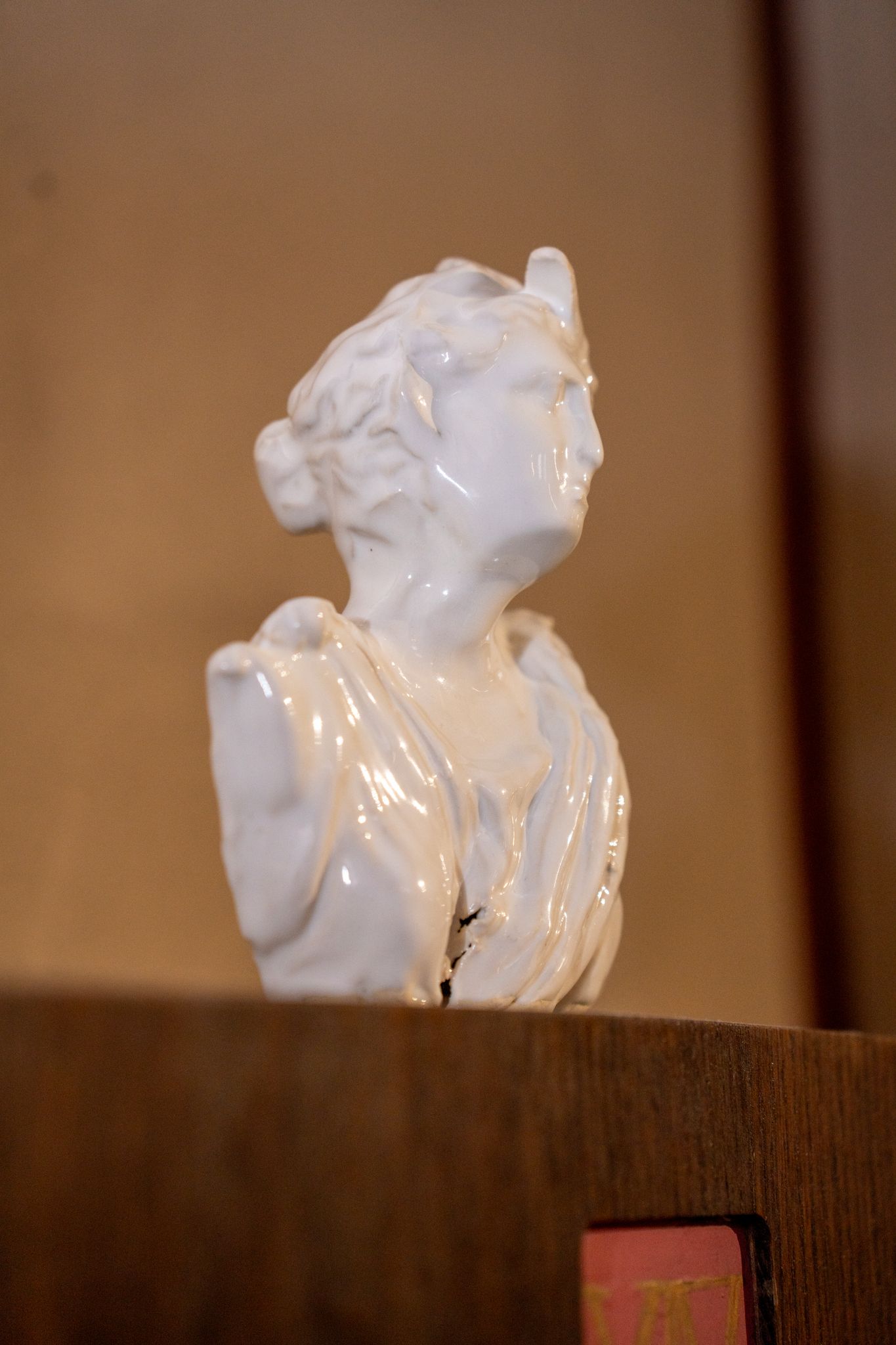
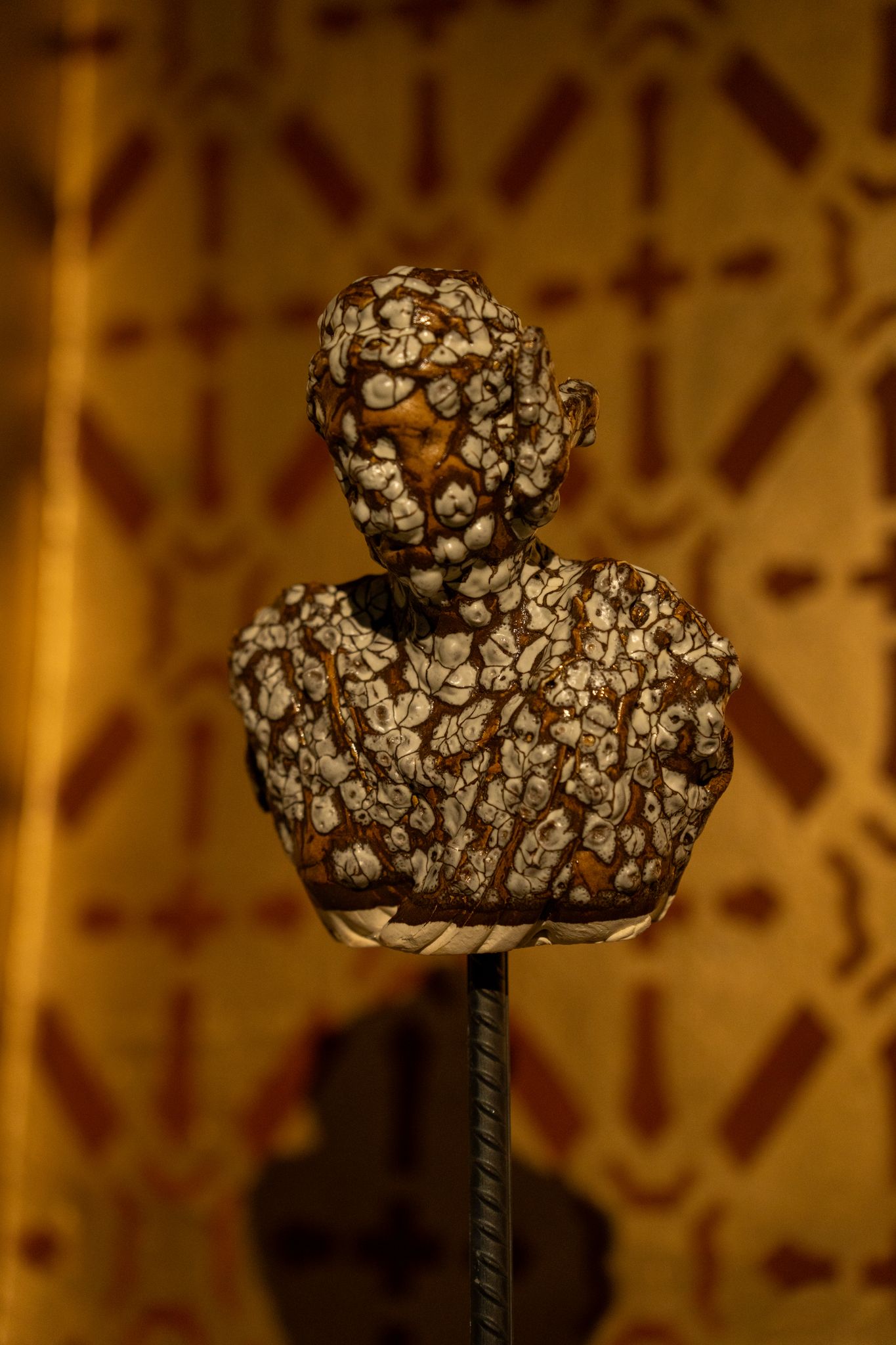
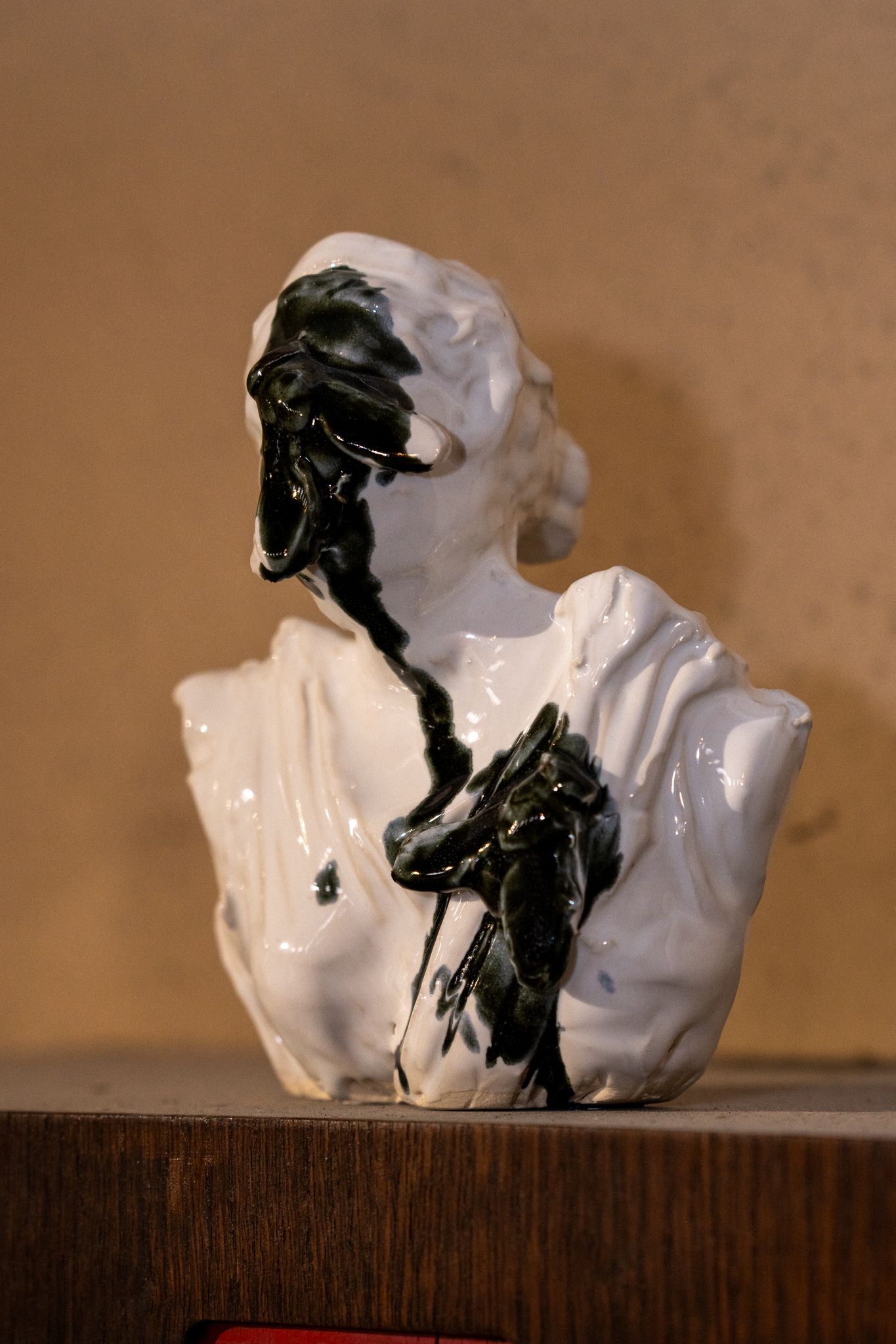
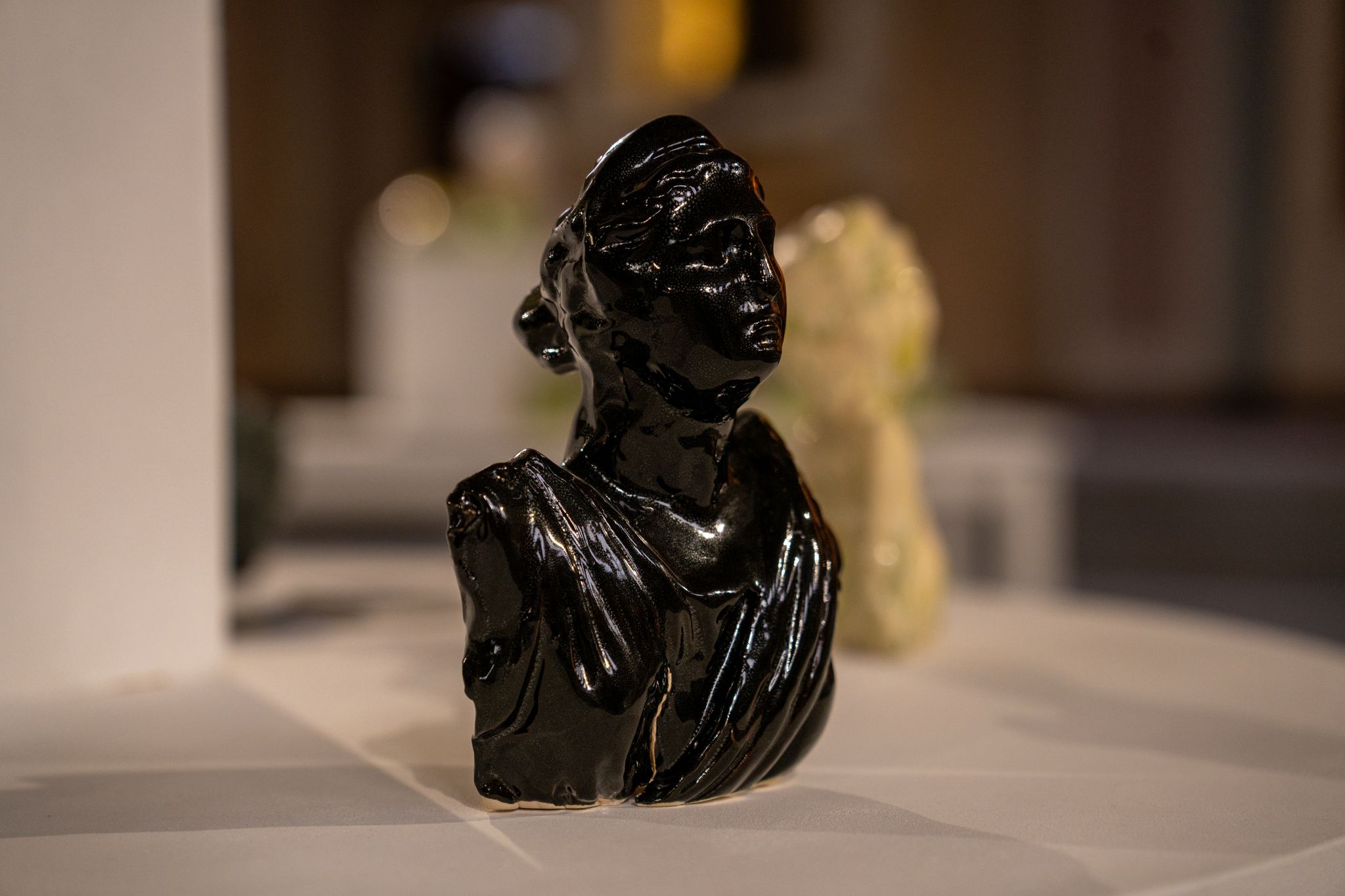
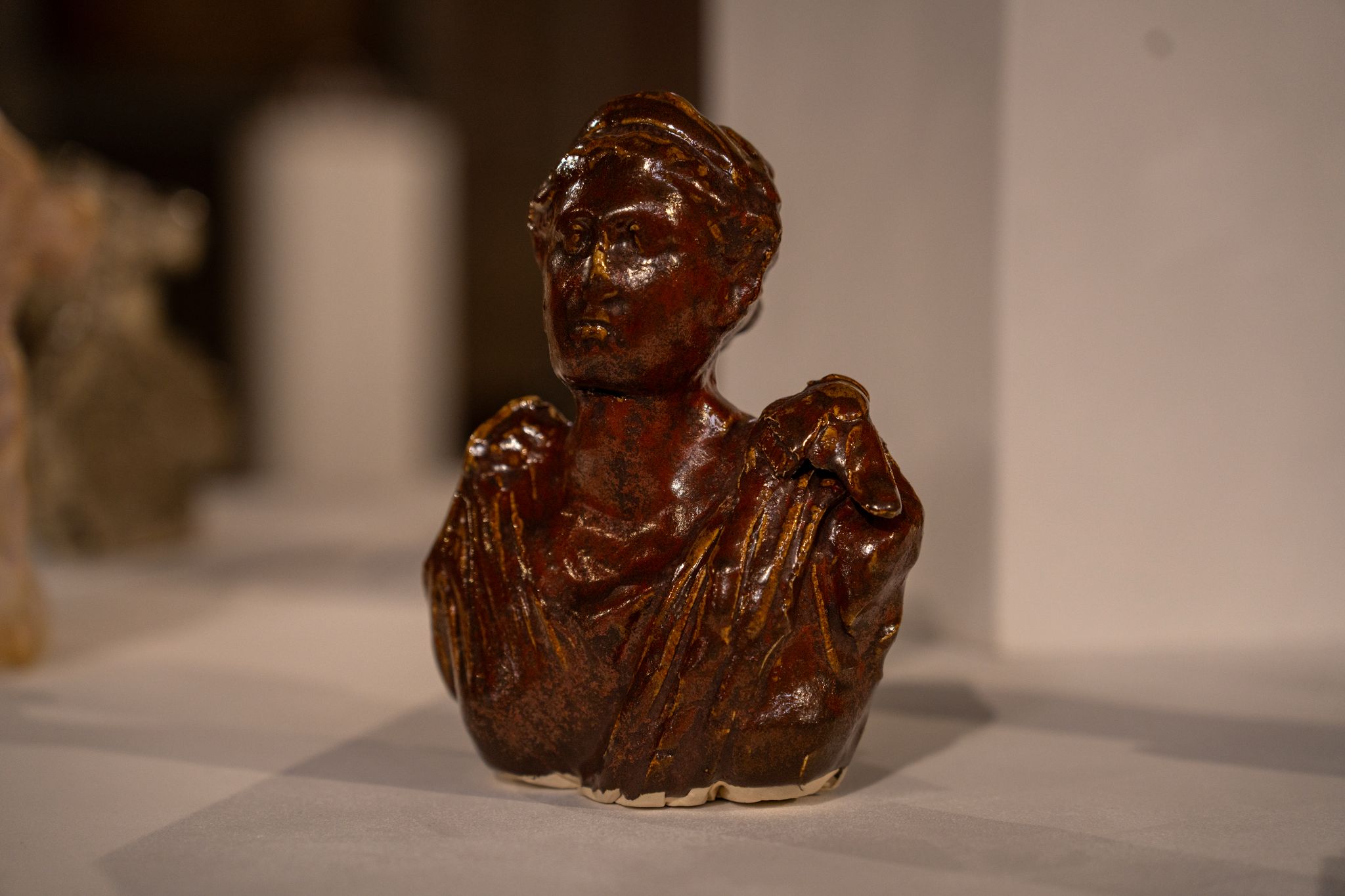
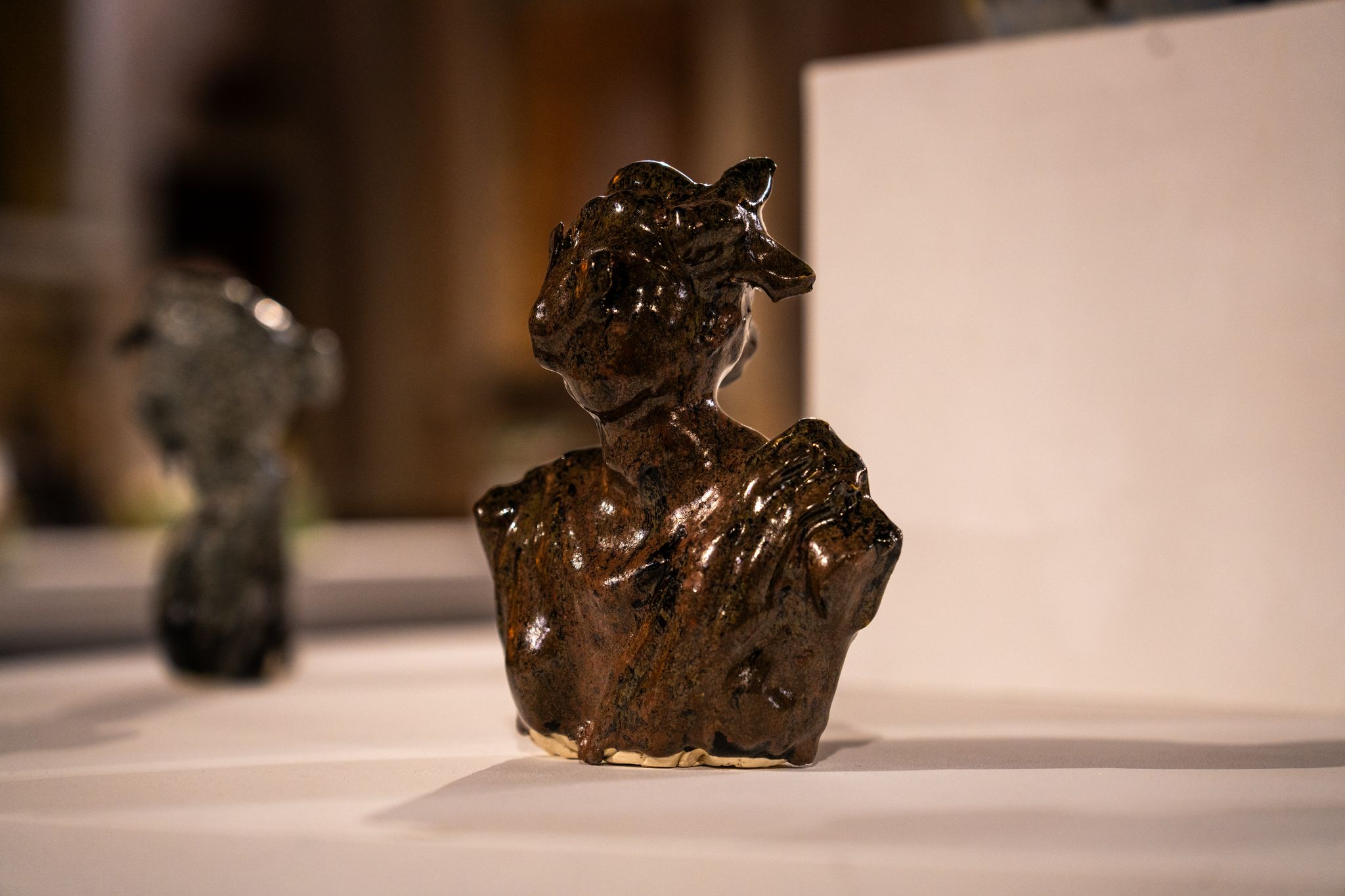
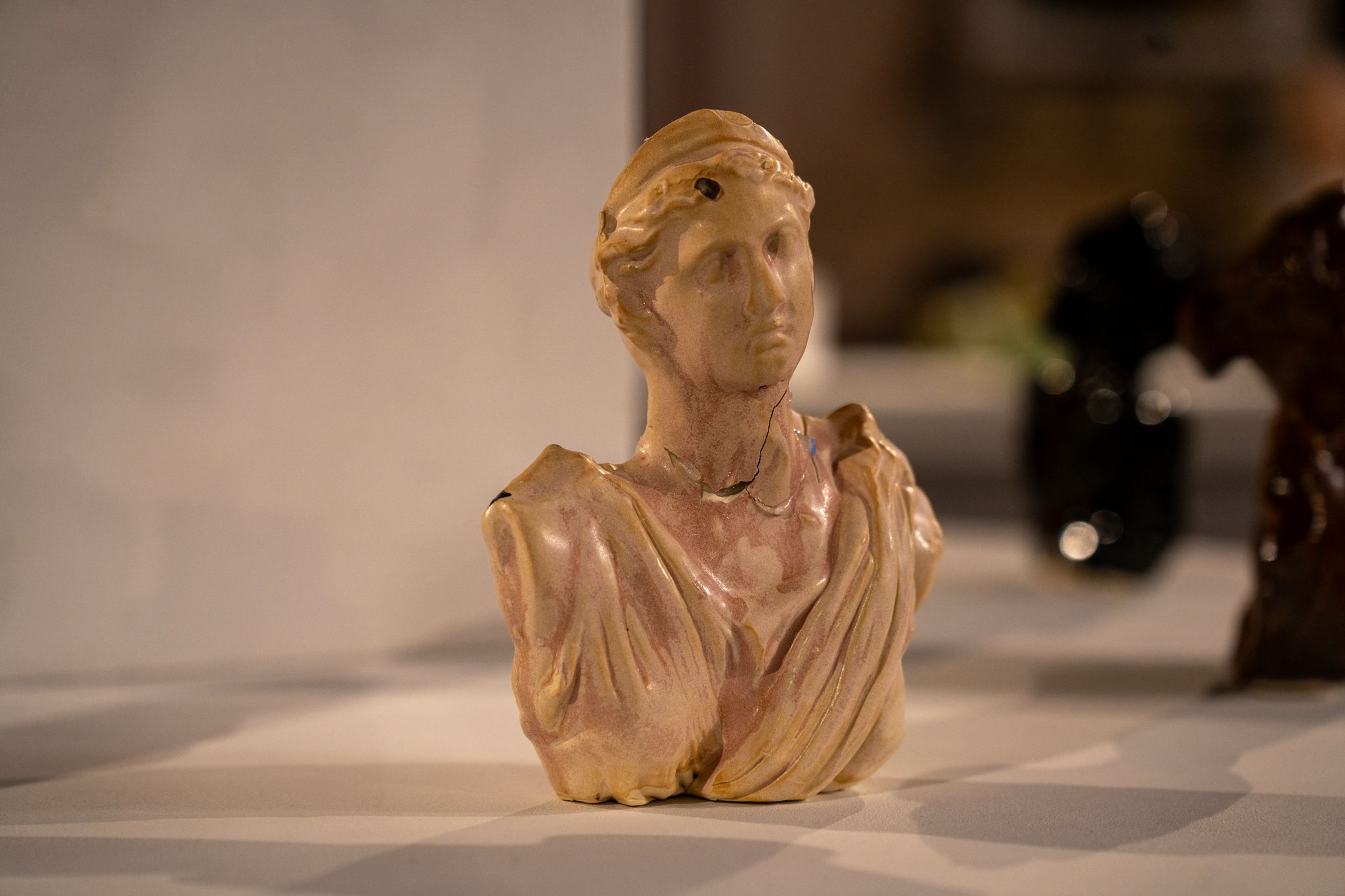
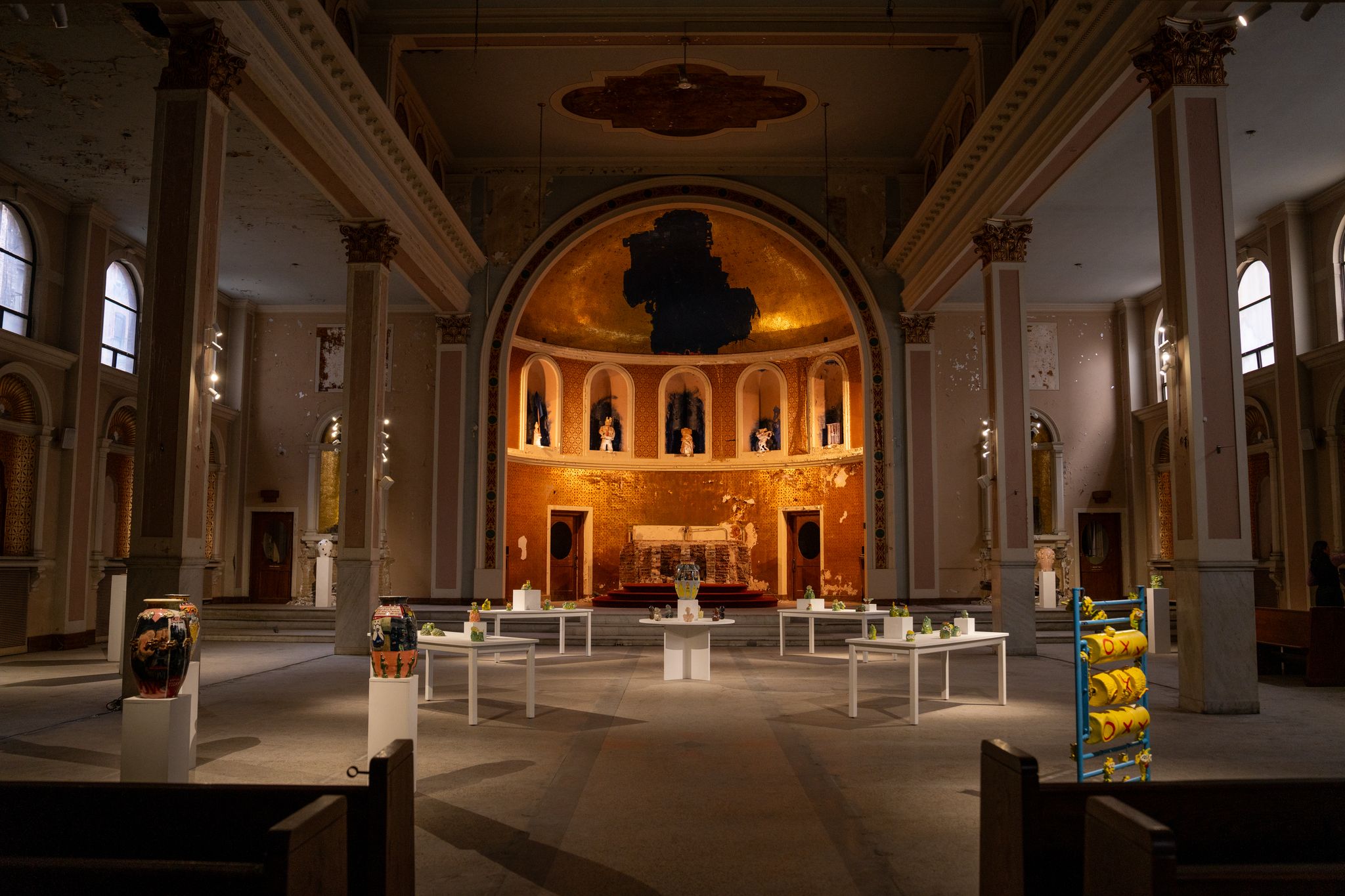
St. Joseph’s Church in Two Bridges, once a place of worship, discipline, and clerical life, now houses a different kind of congregation. Sunday School brings together Isabella Hine, Benjamin Gray, and Ed Bannon, asking them to rework the past through sculpture—bending history, tradition, and questioning what we hold sacred in the process. The lessons once taught here now sit alongside irreverence and play, less confession and more mischief, turning the space into a site for questioning, reshaping, and reinterpreting the past. These artists stretch and distort history, creating sculptures that explore transformation, power, and nostalgia.
Isabella Hine’s kinetic sculptures collapse time, linking early experiments in capturing movement with today’s endless digital loops. Her praxinoscopes, 19th-century optical spinning toys, have been revived for the TikTok era with, who would have thought, the WAP fist-pounding dance among other dance crazes. The contrast between old-world mechanics and modern-day repetition underscores how we have always been drawn to repetition and the consumption of visual culture and the body—over and over and over again.
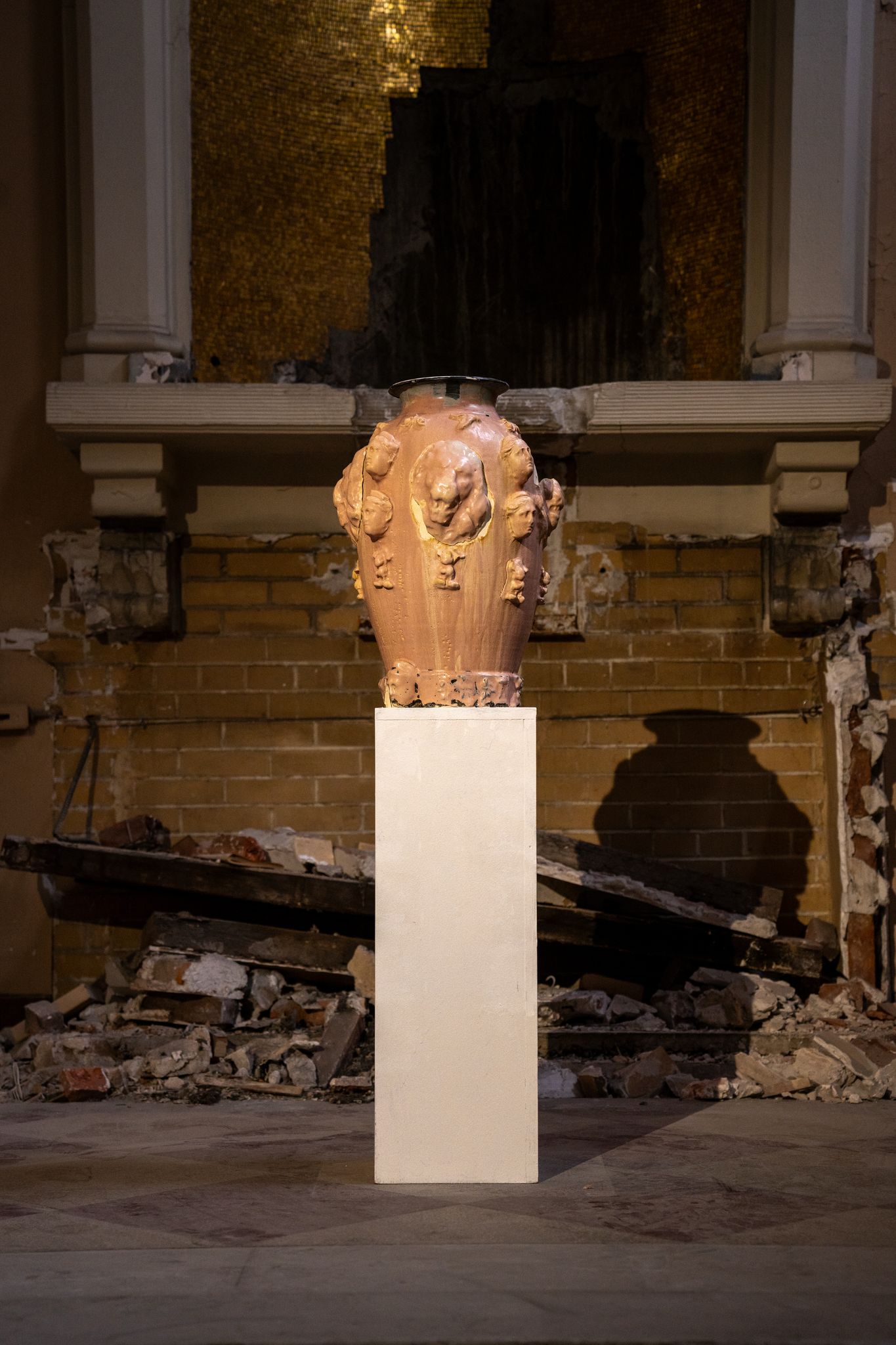
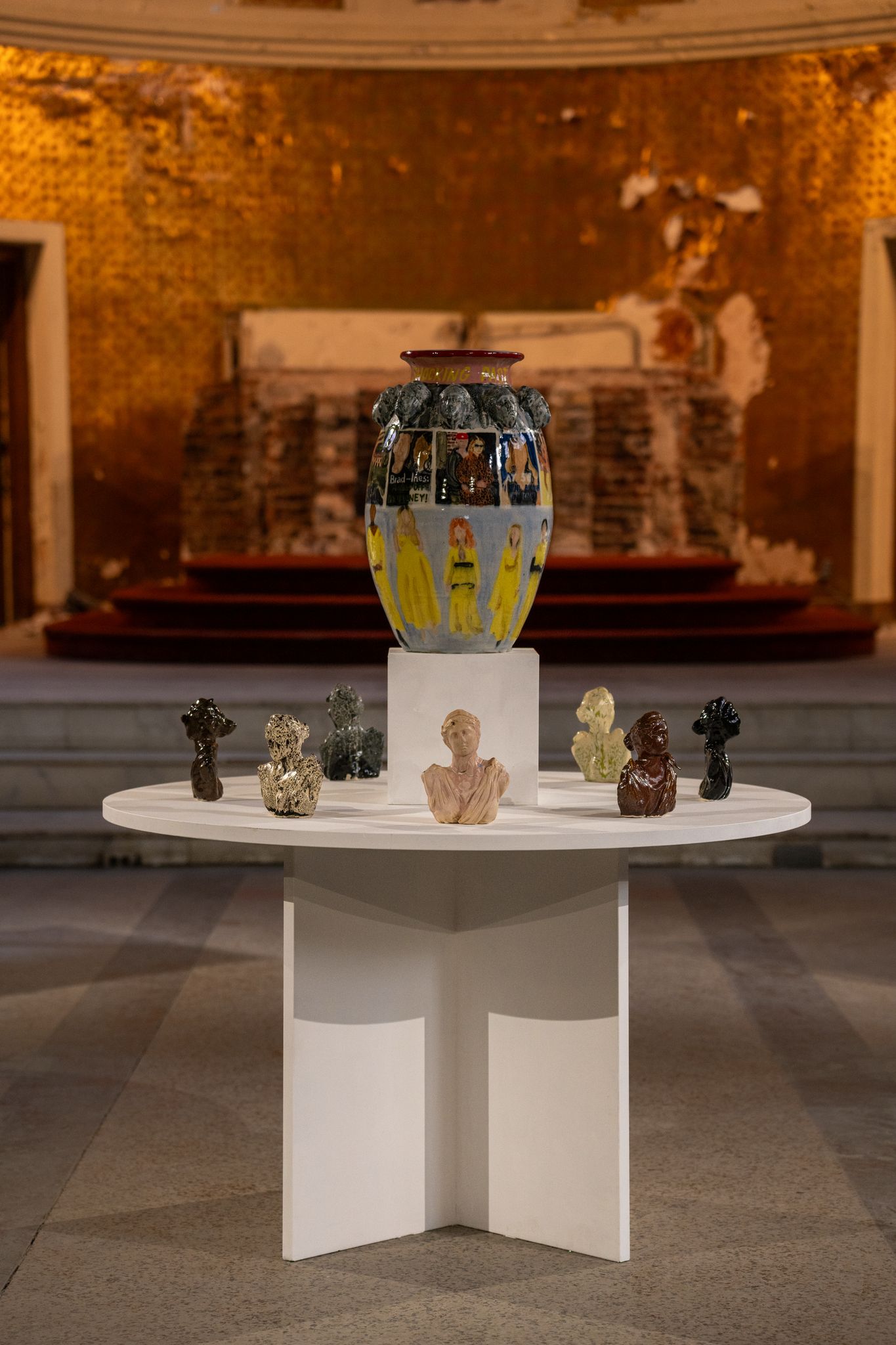
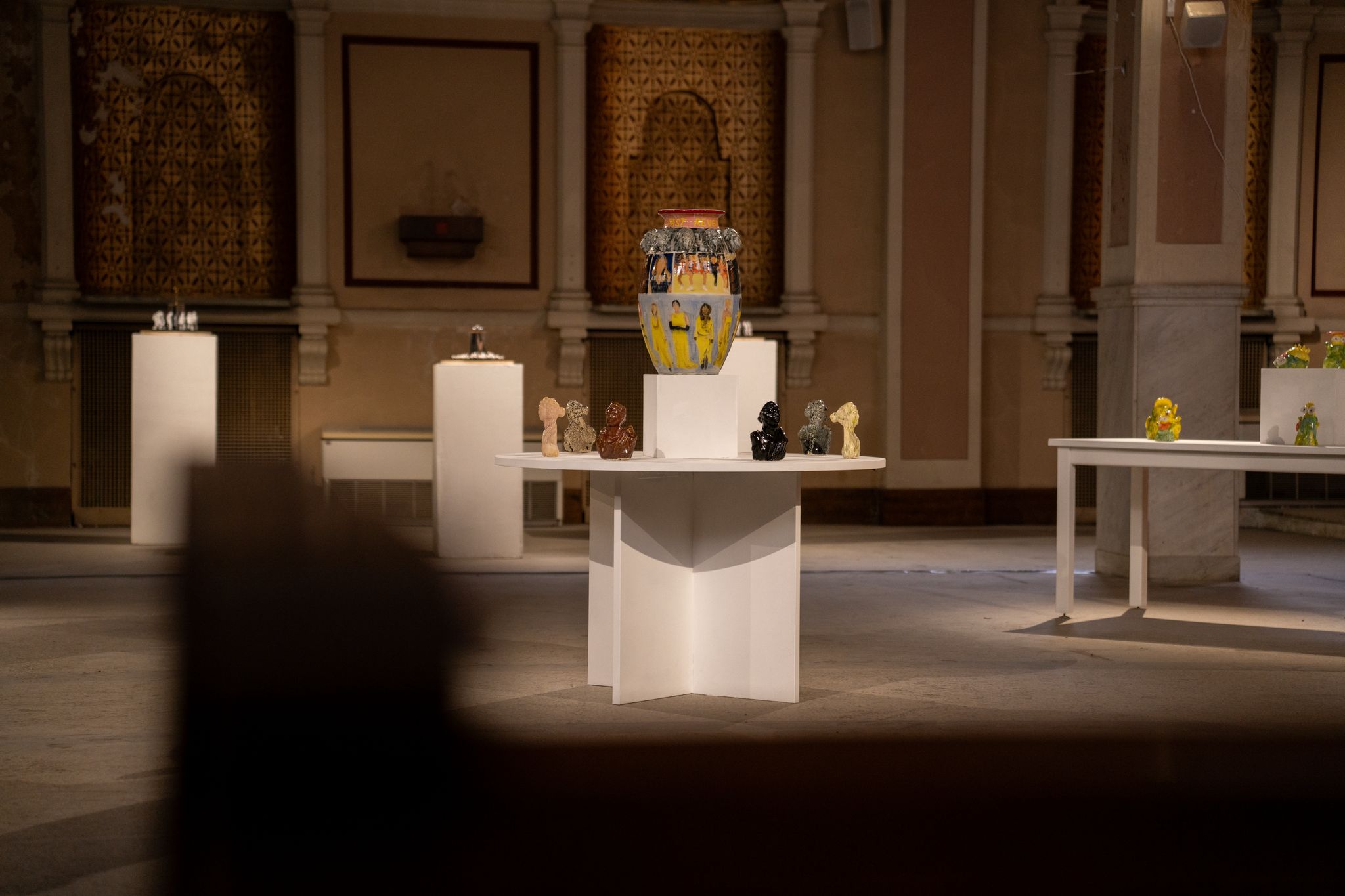
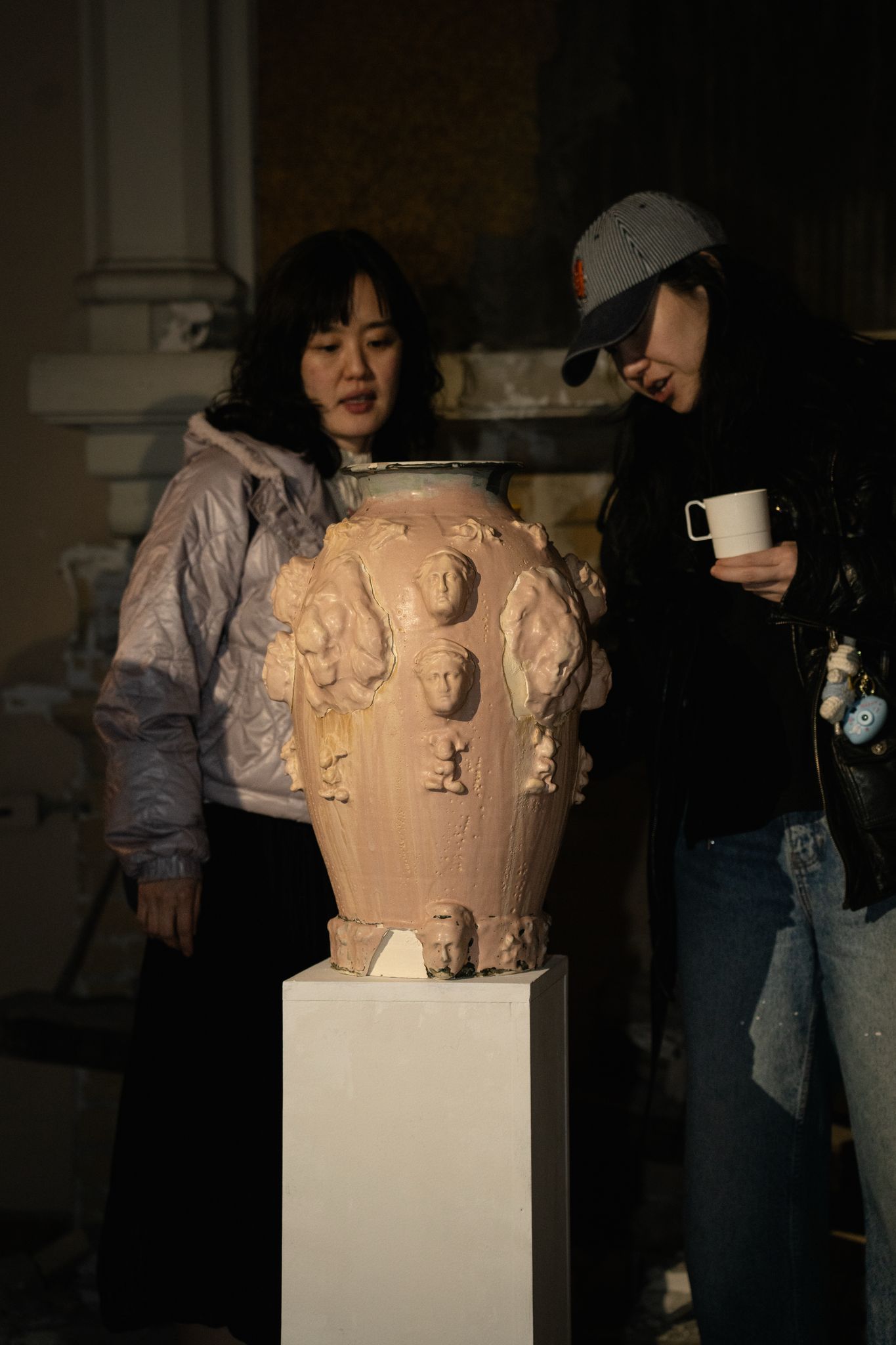
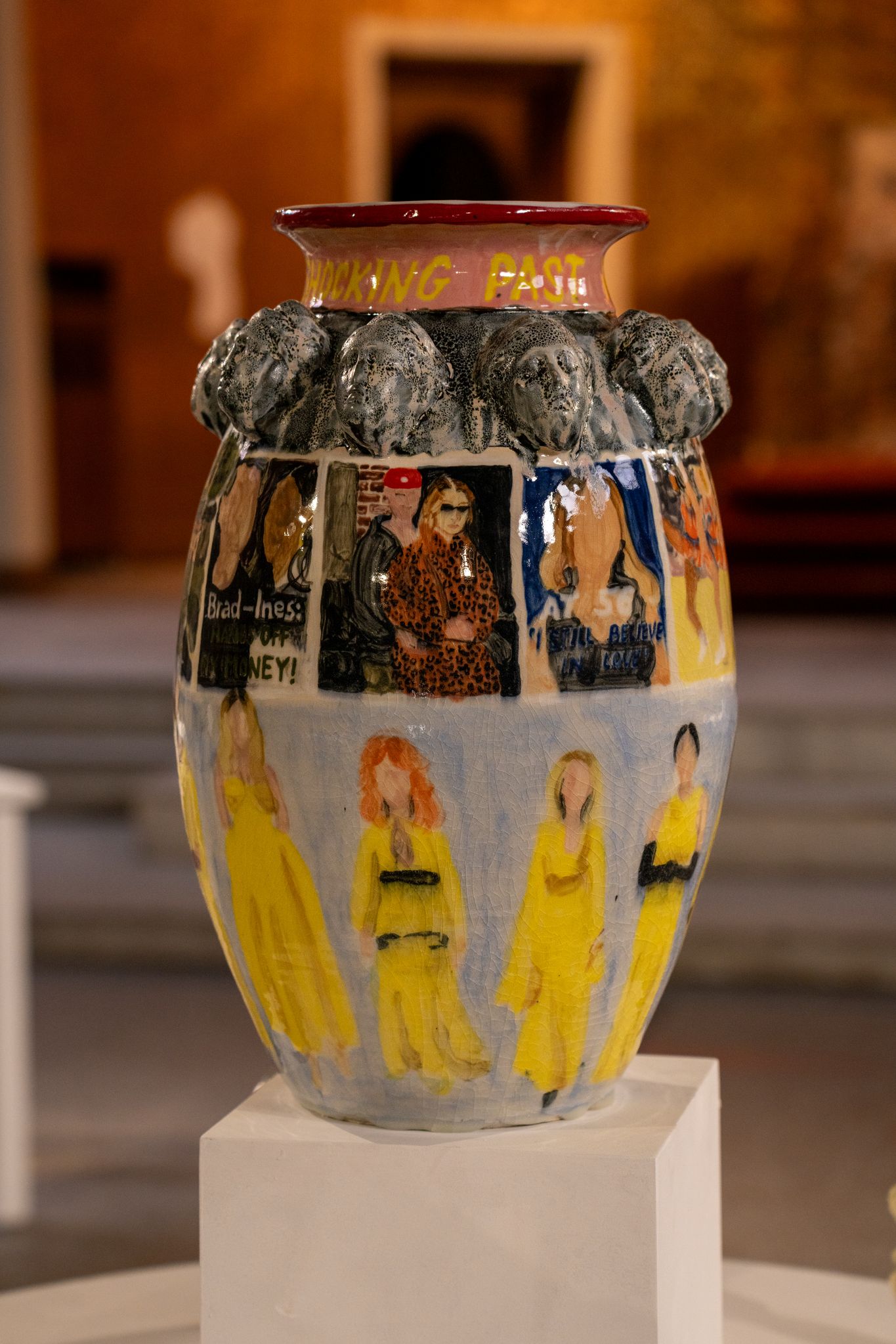
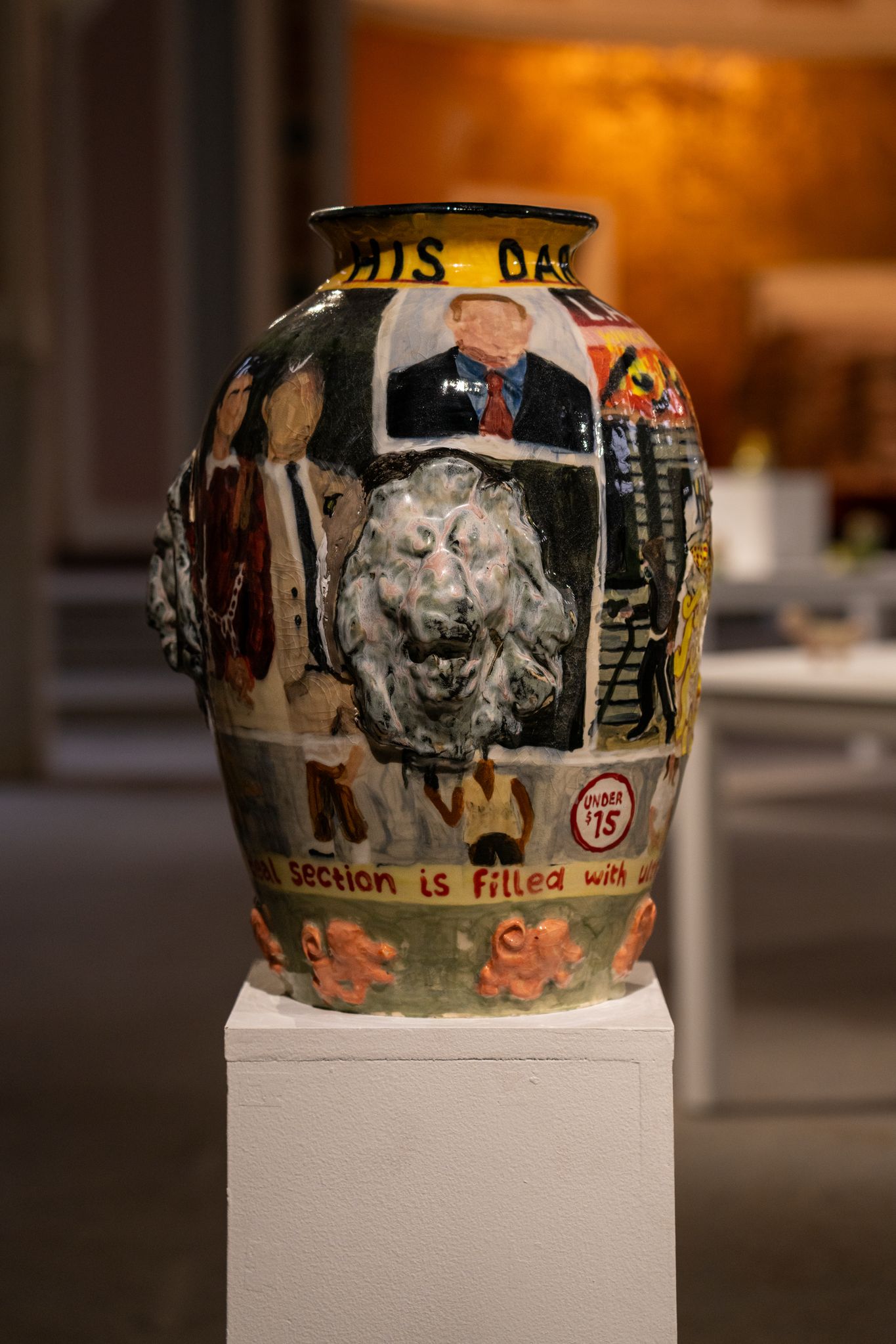
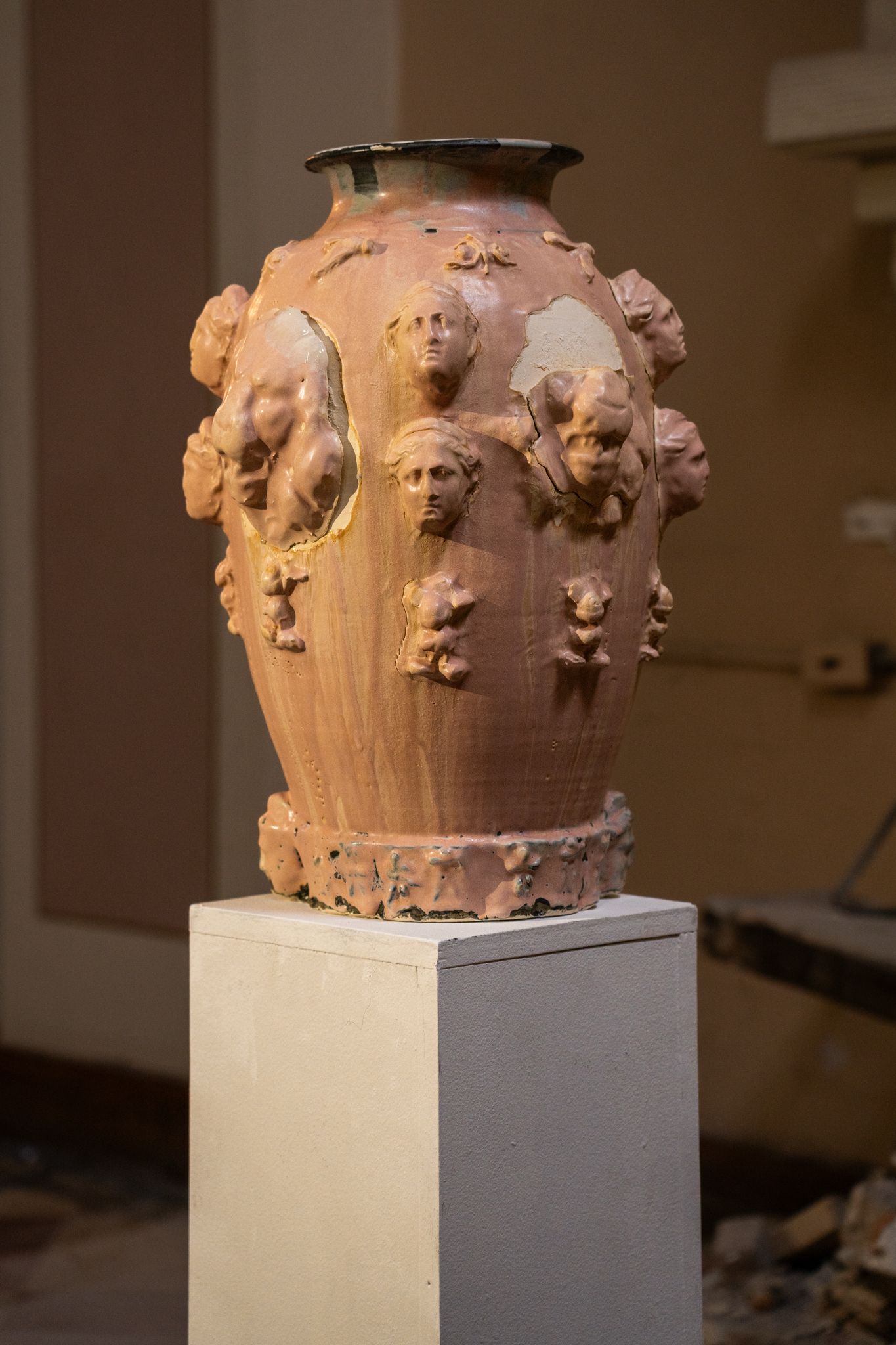
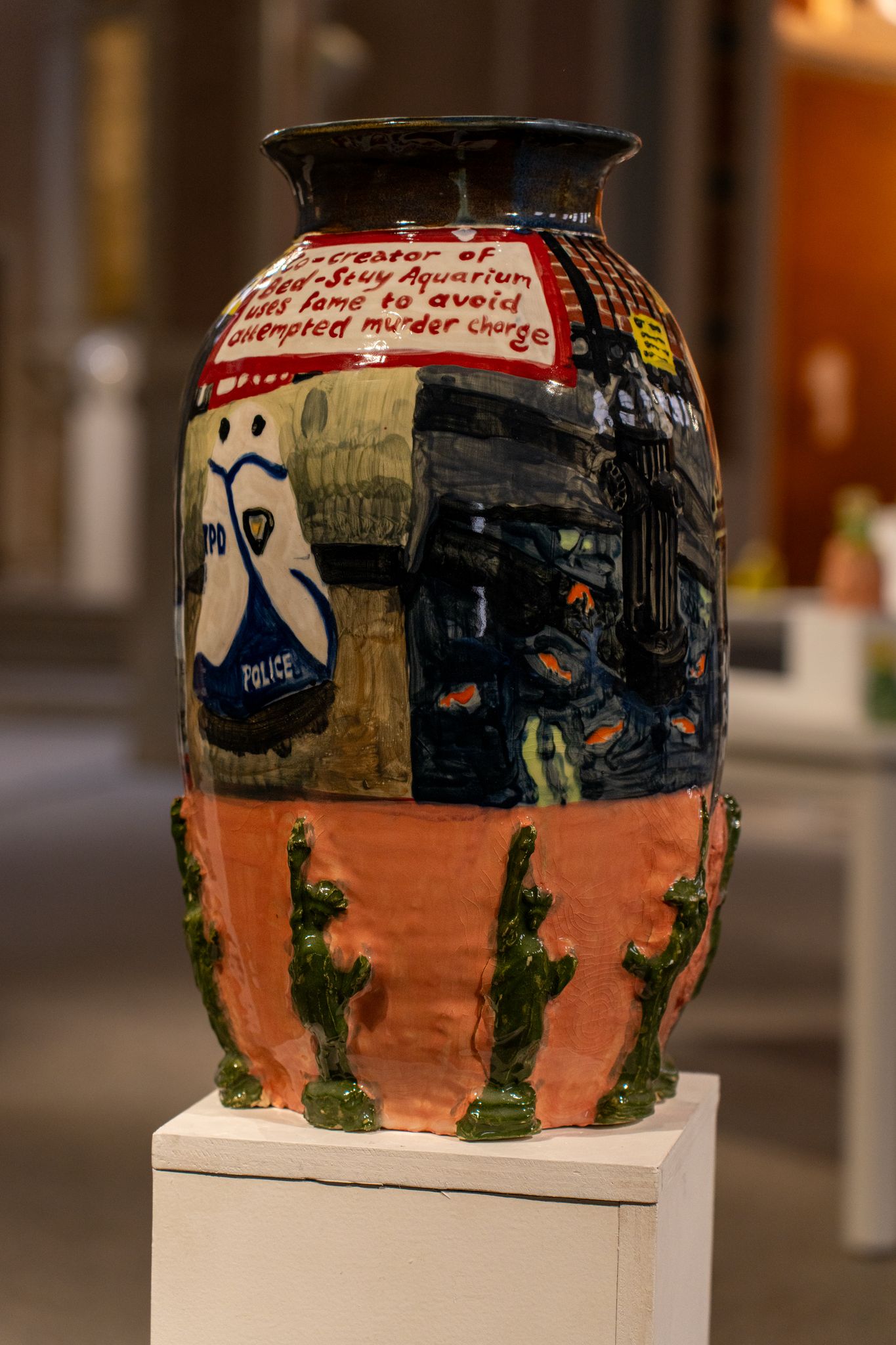
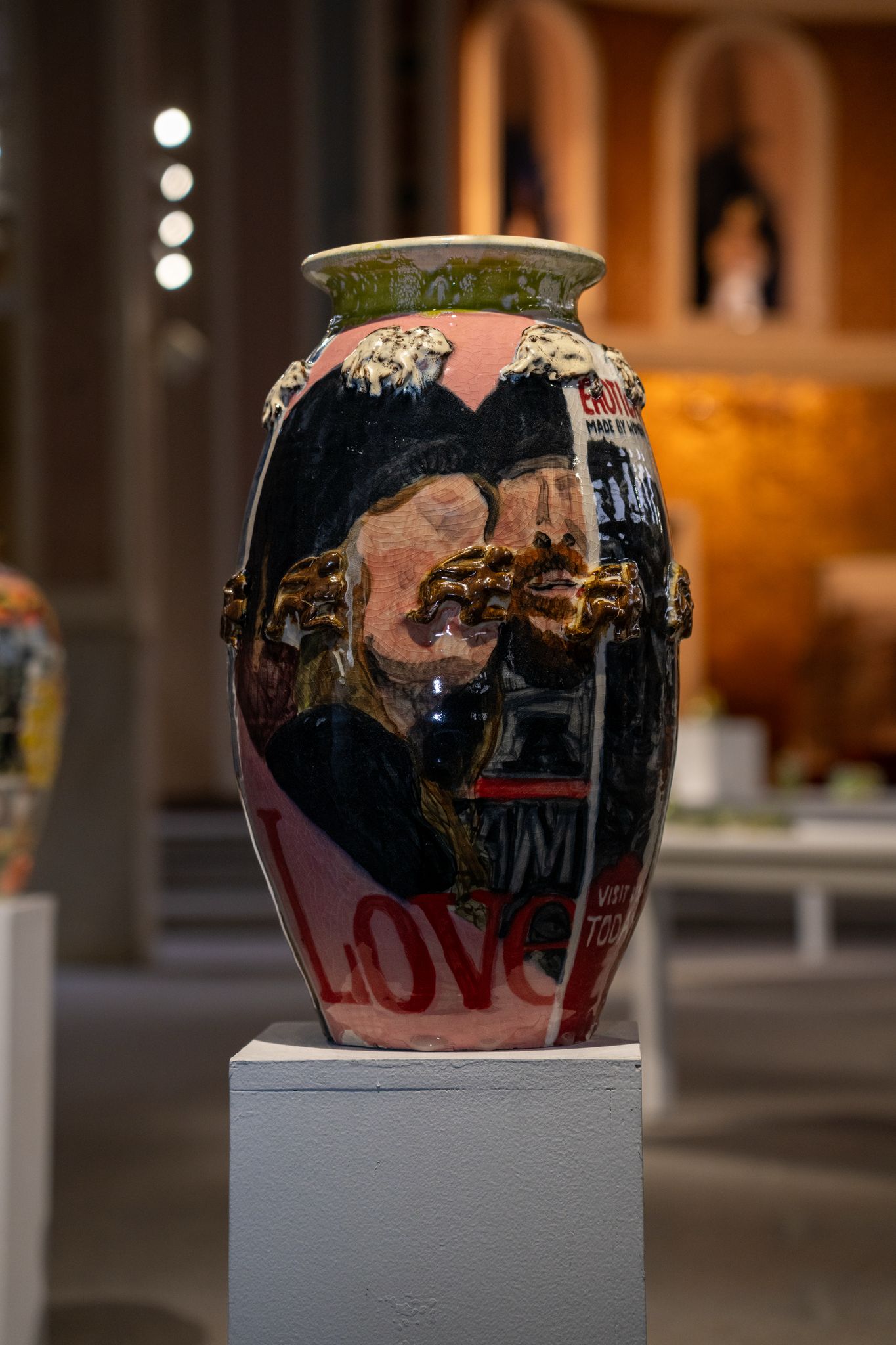
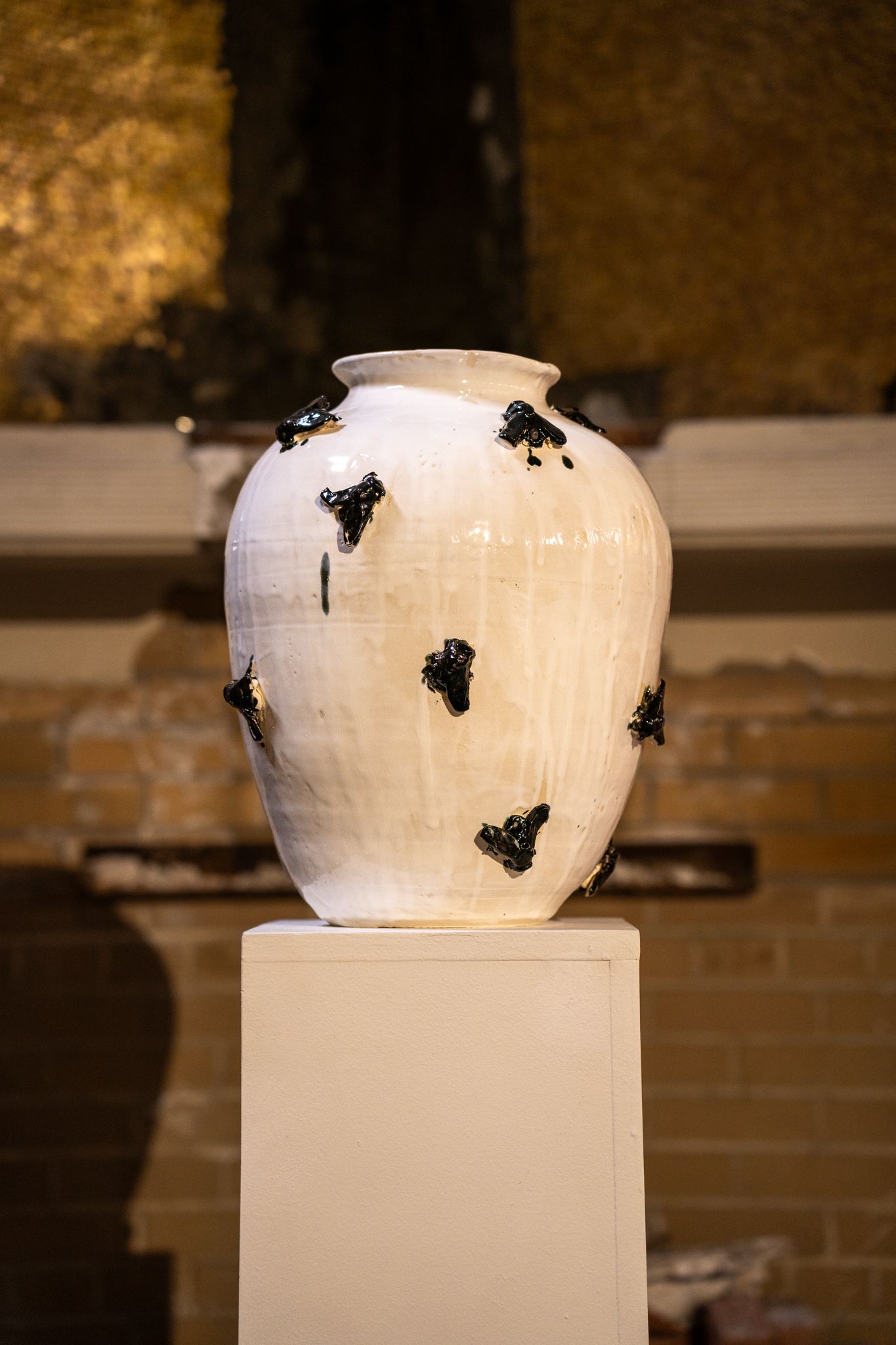
Benjamin Gray pulls apart classical forms, exposing how aesthetics and power have been constructed across time. Working with ceramicist Michael Grundlach, Gray’s amphoras (ancient storage jars) distort tradition, covering these giant pots in images of current pop culture and warping the classical beauty of their shapes. His oversized chess pieces transform the game of strategy into a commentary on power structures that have long dictated who gets to move and who gets played.
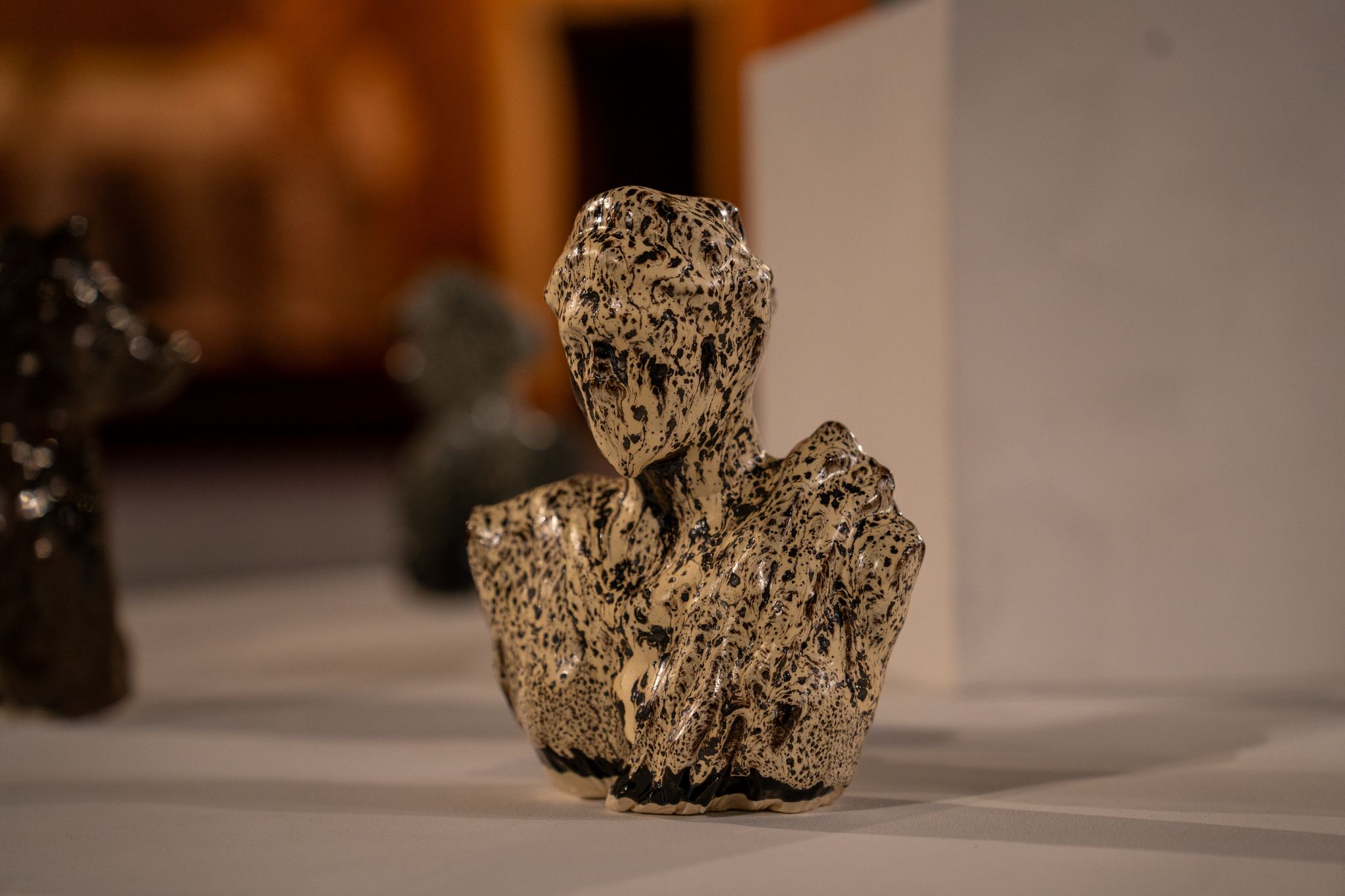
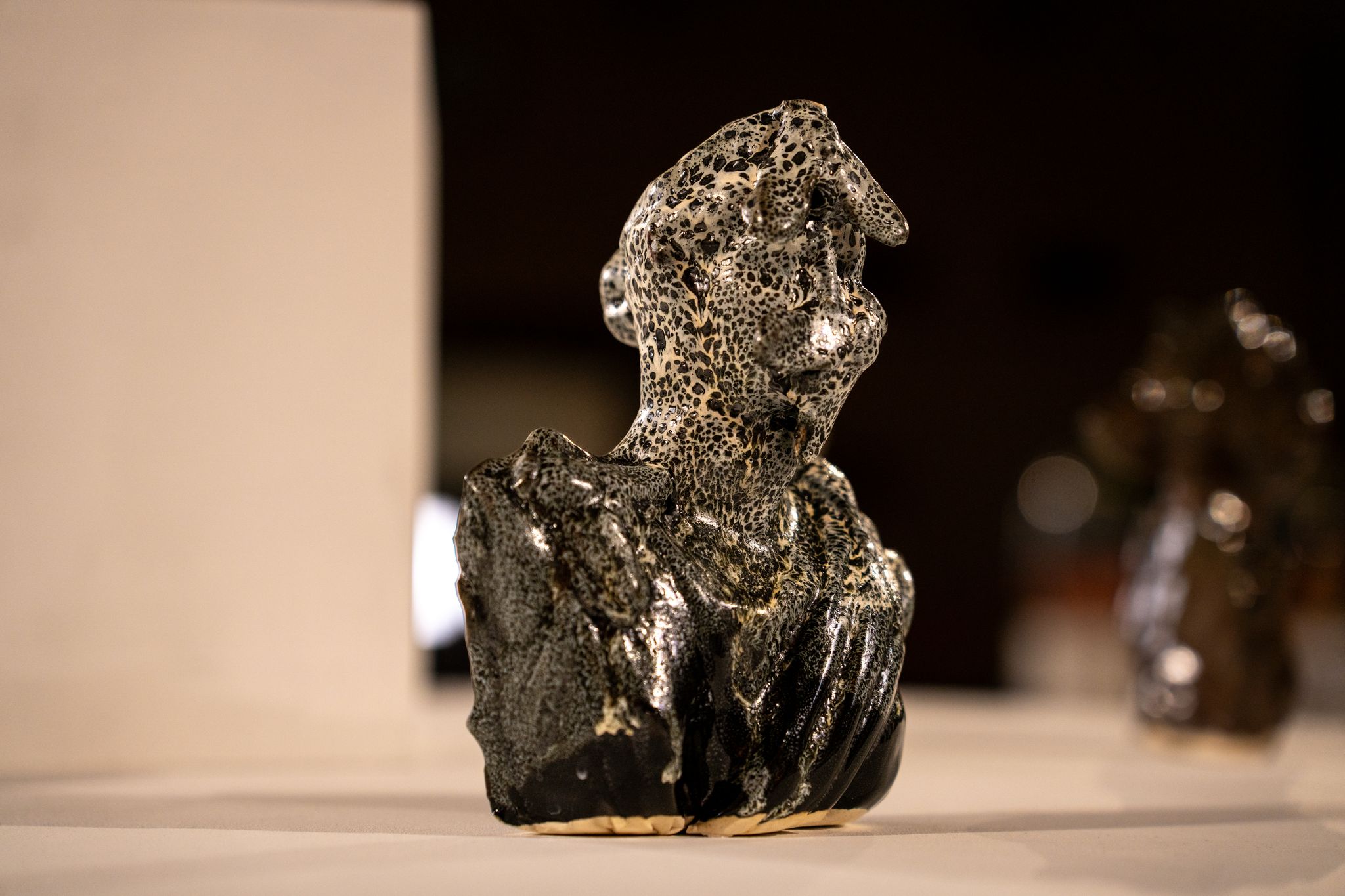
Ed Bannon trades divine iconography for personal mythology, using ceramics to restage childhood memories and fleeting, strange moments. He stages these idols as nativity scenes from his life—whether it be friendships, natural disasters, or everyday absurdities—turning the familiar into something uncanny. His sculptures blur nostalgia with humor, transforming personal experience into relics that sit somewhere between the sacred and the silly. Together, these artists treat history as something to be animated, distorted, and reimagined. Sunday School doesn’t aim to teach—it invites you to reconsider what is sacred, what is worth preserving, and what has refused to change. Through humor, spectacle, and absurdity, they remind us that the past and present are never as separate as they seem and that sometimes, a little irreverence is the best way to make sense of our place in history.